
How will the rise of AI impact our journey to Financial Independence? Photo by Joshua Sortino on Unsplash.
Reading time: 9 minutes
Quick answer — How will AI affect your financial independence journey?
AI is simultaneously accelerating productivity, threatening job displacement, and lowering barriers to entrepreneurship. For workers, the risk is real—particularly for white-collar and knowledge roles. For investors, diversified portfolios capture the upside regardless of which companies win. For anyone on the FI path, AI makes the case for financial independence stronger, not weaker: being financially resilient means AI disruption becomes an opportunity rather than a crisis.
What you'll get in this article
✔ What AI actually is today—and what it isn't yet
✔ Three plausible AI scenarios for work and how to prepare for each
✔ How AI affects stock markets and FIRE portfolios
✔ Why FI is one of the best hedges against AI-driven job disruption
✔ The deeper question: if AI displaces drudge work, what does that mean for why we pursue FI?
How AI Could Affect Financial Independence and Early Retirement
Millions of workers are asking the same question right now: will AI take my job? The honest answer is that nobody knows—but the disruption is already happening. Coders are completing tasks in hours that used to take days. Analysts are building models twice as fast. Researchers are synthesizing months of literature in an afternoon.
For anyone on the path to Financial Independence (FI), this raises urgent questions: does AI accelerate or threaten the career you're counting on? How should you position your portfolio as AI reshapes markets?
And at a deeper level: if AI displaces the drudge work that most people dislike anyway, what does that mean for why we pursue FI in the first place? This article maps out the risks, opportunities, and how to stay resilient—perhaps even antifragile—in the face of this disruption.
What Do We Really Mean by AI in 2025?
We should start out making an important distinction. When we talk about “artificial intelligence” (AI) in everyday conversations, we’re usually using the term as a catch-all label rather than a precise definition. But we should keep in mind that the systems driving the current wave of excitement are mainly large language models (LLMs) like ChatGPT, Claude, or Gemini. These models are “AI tools” most people interact with daily, and they are already shaping how we work, learn, and make decisions in everyday life.
These are trained on huge datasets of human text and optimized to predict and generate language in ways that mimic reasoning, explanation, and problem-solving. Although we’re all aware of how powerful they can be, they don’t “think” or “understand” in the way humans do. Recognizing this distinction early on is important, because it can help temper emotions like overhype or fear.
Remember that the tools we use today are far from being artificial general intelligence (AGI). Language models aren’t new—they’ve been around in research for decades. What changed is scale—unprecedented computing power and internet-scale data turned an old concept into something that feels revolutionary.
For simplicity and alignment with public perception and sentiment, though, we’ll continue to use “AI” interchangeably with LLMs and related tools in this article. When we refer to something more than what we have today, we’ll explicitly state “artificial general intelligence” or AGI.
AI is already transforming how we produce work, generate code, synthesize knowledge, and interact with digital environments. A complex coding task—like developing our new Financial Independence Calculator—might have taken a professional software developer days or even months to complete. Instead, I was able to put a first version together in a couple of days with advanced R coding experience but zero previous knowledge of python or on how to create a tool’s frontend.
A financial analyst can build an Excel model at least twice as quickly, while an academic researcher with the right tools can brainstorm and come up with exciting ideas within a couple of hours. The implementation of these practical capabilities taking place today—not the theoretical possibility of AGI further down the road—form the basis for assessing how FI and FIRE journeys will be impacted.
Since we’re assessing mainly the impact of LLMs, it’s important to acknowledge their limitations. They often make up facts, misinterpret context, or produce surface-level answers unless rigorously guided. They cannot independently set goals or display human creativity outside of pattern recognition.
What does this mean for the FI and the FIRE community? First, AI can be an extraordinary accelerator if you learn to interact with it skillfully, and, second, you should be careful to mindlessly outsource your judgement to it, e.g., related to long-term financial planning. In its current capabilities and used wisely, it can serve as a complement—not a replacement—to human decision-making. As we covered in a previous article, human judgment and wisdom are likely to become an increasingly valuable commodity in this AI-powered world.

ChatGPT prompt. LLM models are increasingly consulted for everyday questions. Photo by Solen Feyissa on Unsplash.
How Has AI Already Impacted Work and Learning?
Before jumping in into what it means related to FI/FIRE, let’s assess how AI is changing our workplace. The most immediate impacts of AI have been on knowledge acquisition and problem-solving. In the past, mastering a complex subject required sometimes weeks of study or more—digging through books and papers, and making sense, if applicable, of conflicting expert opinions.
Now, with well-crafted prompts and a critical guiding eye, you can interrogate an AI system to uncover gaps in your understanding, ask for multiple perspectives, look for holes in your reasoning, and get a clear synthesis within hours instead of months. This has accelerated self-directed learning, which is important for anyone navigating careers, entrepreneurship, or investing. It also reduces the risk of falling into echo chambers; unlike Google’s search results that often reinforced biases—think of conspiracy-type folks—LLMs can more easily present a spectrum of views.
In many workplaces, AI is acting as a force multiplier for productivity. Coders using AI assistants complete tasks faster, customer service agents resolve tickets more efficiently, and researchers generate grant applications or papers in a fraction of the time. For individuals pursuing FI or hoping to retire early, this means the ability to earn more per unit of effort, accelerate side hustles, and build financial freedom faster. Although it doesn’t guarantee job security, it does create opportunities to stand out if you decide to learn to use the tools effectively.
Another often overlooked angle is the democratization of capabilities and the lower barriers to entry. In the past, it was simply not possible for everyone to craft a polished business plan, come up with funding, design a logo, code a website, or hire help. Today, the barriers to entrepreneurship have been dramatically lowered—especially for a motivated person with basic digital literacy. This matters for FI/FIRE because the optionality to launch side hustles or scale small businesses has expanded dramatically—potentially accelerating the FI timeline.
However, it seems very plausible that this acceleration will take place unevenly. Workers who adapt quickly to AI workflows may thrive, while others who cling to old methods risk obsolescence. The FI/FIRE community should be particularly attentive here, since the skills they currently rely on to earn, save, and invest may not be as valuable in five years. Building a habit of continuous learning—and treating AI as an opportunity rather than a threat—is becoming a crucial resilience and antifragile strategy.
This raises the natural question many ask: Which jobs are safest from AI? Besides being open and flexible to integrating AI within your industry, other sectors related to manual trades, health care with human touch, or jobs requiring physical presence remain less vulnerable, though even these could shift as robotics advance.

The democratization of AI. The barriers to entry for entrepreneurs are lower than they have been at any point in human history. Photo by CHUTTERSNAP on Unsplash.
Three AI Scenarios: What They Mean for Jobs, Portfolios, and FIRE
There is certainly substantial uncertainty as to how the roll out of AI will unfold in the medium and long term, but we can already think of plausible scenarios and how to respond to each one of them.
One scenario is productivity acceleration without displacement. Some companies will chose to keep roughly the same number of employees, but will simply reach their goals much sooner. This can benefit workers also in the short-term (via bonuses or career growth) and investors in the long term (via higher profits and stronger long-term stock performance). For FIRE seekers this is the bullish scenario—portfolios may appreciate substantially even if wages hold steady.
The antifragile mindset here is to lean into AI adoption: develop complementary skills you can use in your workplace, embrace the productivity boost, and use surplus income or time to double down on your savings rate—the single most important lever on your path to Financial Independence.
A second scenario is efficiency-driven layoffs. Under this scenario, firms maintain targets but achieve them with fewer staff, and white-collar workers face substantial displacement, while a smaller subset of highly skilled professionals capture most of the gains. For workers, the risk is obvious—job loss, career stall, and downward social mobility.

Depiction of Scenario 1—productivity acceleration without displacement. Workers become more productive and company reaches targets faster. FIRE-minded individuals may see stable wages, yet their portfolios appreciate. Photo by Fernando Hernandez on Unsplash.
For FIRE investors, though, paradoxically the outlook may still look positive, with profit margins boosting their equity portfolio. The antifragile response for workers is to hedge against the downside: build entrepreneurial skills now, maintain a sizable emergency fund, and work to diversify your income streams well before potential layoffs. For investors, diversification and rebalancing protect against concentration risk while still capturing the upside.
Finally, the third scenario is an entrepreneurial explosion: the lower barriers to entry mentioned earlier enable hundreds of thousands of individuals to launch products, services, and niche businesses. Imagine the new internet of the 1990s but with far more accessible and real tools. This path should be exciting for aspiring entrepreneurs, since this sense of new-found freedom and limitless options expands the chances of accelerating their path to FI. For FIRE portfolios, this scenario supports broader market dynamism—which is captured with diversified index fund portfolios that eventually track the winners.
In practice, these three scenarios are not mutually exclusive. Quite the opposite—they will likely take place simultaneously, in different industries and at different times. The challenge itself is in actually discerning what will be the mix or share across these scenarios. For FIRE-minded individuals, the key is to scenario-plan, i.e., how you would respond in each of these three circumstances, both as a worker and as an investor. By walking through these scenarios—summarized briefly in Table 1—you build resilience and optionality rather than betting on a single future outcome.
I think it could be especially helpful to build a similar table to the one presented below that is tailored to your unique situation, including the column on how you personally would respond to each possible scenario.
Table 1: Three Possible AI Futures and Their Implications for Work and FIRE. How will you personally prepare for each of the three different scenarios—both as a worker and investor?
| Scenario | Impact on Workers | Impact on FIRE / Portfolios | Antifragile Response |
|---|---|---|---|
| Productivity Acceleration | More output with same workforce; potential career growth, bonuses, and skill enrichment. | Company profits rise → stock appreciation benefits FIRE investors; wage growth modest but stable. | Adopt AI tools early, boost savings rate with higher income or freed-up time, negotiate salary, reinvest gains aggressively. |
| Efficiency-Driven Layoffs | Significant risk of job loss for white-collar workers; smaller group of highly skilled capture most gains; risk of downward mobility. | Higher profit margins strengthen corporate earnings → good for portfolios, painful for workers. | Maintain emergency fund, diversify income streams, hedge with side hustles, rebalance portfolio to avoid concentration risk. |
| Entrepreneurial Explosion | Low barriers to entry spark startups and solopreneur ventures; more creative but unstable work paths. | Increased market dynamism; diversified index funds capture long-term winners while spreading risk. | Leverage new tools to launch projects, test ventures at low cost, while keeping core portfolio diversified and rebalanced. |
Of course, these scenarios also feed directly into markets—if productivity and disruption reshape work, how will this translate into stock prices and portfolios?
How Does AI Affect the Stock Market and Portfolios?
Goldman Sachs estimated in a 2023 report that AI adoption could lift US labor productivity growth by 1.5 percentage points annually for the next decade—potentially doubling GDP growth compared to the pre-AI trend. That optimism is one reason valuations of AI-driven firms have surged.
Understandably, though, many investors in the FIRE community often ask: how will AI affect the stock market—are we already in another bubble? Current valuations of leading AI firms suggest very elevated expectations, with the SP500 presenting high PE ratios relative to previous decades. This metric in isolation could suggest some degree of hype is likely already priced in.
But, unlike the dot-com era where companies had little more than a website and a promise, today’s firms are delivering tangible productivity gains. We can actually use these tools ourselves already, driving real revenue and cost savings. This aspect makes it somewhat less speculative than the internet bubble—though bubbles and corrections are far from unlikely further down the road.
But remember that in times of exuberance greed can be our enemy. Despite the huge opportunities over the next few years, remember that it’s all a party until it’s not. If you feel inclined to gamble or engage in unicorn stock picking, go ahead—as long as you’re not allocating more than 5-10% of your portfolio. This allows you to engage in any potential growth experienced by AI-focused companies or funds while still having a very solid equity portfolio of 90-95% of low-cost, internationally diversified index funds.
For the full case on why passive, diversified investing remains the right core strategy—in AI disruption or any other market environment—see our complete investing guide for FIRE.
If you decide to gamble, be sure at least to regularly rebalance your portfolio so you lock in the potential gains from any possible AI-driven bull market. If it helps with the FOMO, remember that the core of your index-fund portfolio will also mean you’re exposed to any potential gold-rush-style AI boom.

Stock-picking is generally a gamble for most individual investors. Very solid data shows that after taxes and fees, active investors underperform simple index funds. If you want to gamble on AI, be sure it doesn’t represent more than 5-10% of your portfolio. Photo by Kaysha on Unsplash.
It’s worth noting the historical parallel with the dot-com bust and recovery that followed, since a similar pattern could also potentially emerge over time. Even if AI does transform our lives, it doesn’t mean our portfolios will be transformed for the better in the short term, especially for investors poorly diversified.
Some argue that “this time is different”—that AI’s impact will be so transformative that diversification would dilute returns rather than protect them. But history shows otherwise. During the dot-com boom, only a handful of firms—Amazon, Google, Apple—emerged as lasting winners, while most disappeared. Diversification ensured that long-term investors still held winners without needing to be lucky with their guesses in advance.
During this new wave of AI disruption, we simply don’t know yet who the winners will be in 20-30 years time. Maybe they don’t exist yet—how many of the Magnificent Seven even existed 20 years ago? It’s important to consider how risky it is to allocate a high share of your portfolio and hard-earned money on single stocks in any scenario—let alone a scenario of high disruption. Instead, FIRE portfolios that are well-diversified will naturally hold these winners in 20 years through index fund investing.
But FIRE isn’t only about numbers.If AI changes work itself, then it also forces us to rethink why we work—and what financial independence is really for.

How many of today’s Magnificent Seven were good invement prospects or even existed during the early 2000s? Photo source: Reddit: r/mildlyinteresting.
AI, Work, and the Search for Meaning
The rise of AI won’t be only about changing jobs and adjusting portfolios—it’s also already raising deeper questions about what work and life are for. In previous posts we explored how humans have always searched for meaning, often tying it to survival, status, or contribution. AI disrupts to some extent this narrative because it’s displacing knowledge workers first. If machines can handle large parts of our cognitive work—what then remains for us?
From a relativist perspective, meaning has always shifted across eras—agriculture tied purpose to land and seasons, industrialization to productivity and science, the digital age to identity and information. The AI era could push us towards a very different lens through which we seek meaning: judgement, wisdom, and the deliberate use of technology to serve rather than dominate our lives.
For FIRE-minded folks, AI could reframe in a liberating way what FI is for. If AI ends up reducing drudgery and our baseline security improves, pursuing FIRE doesn’t have to mean decades of extreme saving. We explore this question in depth in our complete guide to work, purpose, and Financial Independence.
The bar to freedom could be lowered: instead of a race to escape from meaningless work, it could be a chance to engage in creative entrepreneurship, arts, or community projects that resonate more deeply. In other words, AI could enable us to trade corporate ladders and empty job titles for more authentic and fulfilling ventures.
It’s important to reflect though that “liberation” is far from automatic. History shows that new tools can just as easily create new traps. The internet boom was a good example—it was supposed to be something freeing, yet many feel more tethered to screens and stressed than ever before.
Without intention, AI could simply create a new version of the same unfulfilling work experience. This brings up the following question: how can we become resilient to AI’s potentially negative impacts? The answer may lie less in competing with machines and more in cultivating wisdom, judgment, and antifragile habits.
I think embracing the Stoic lens can provide a timeless anchor. The ancient Stoics argued that human purpose lies in rational judgement and virtue, not in any external role or technology. In an era where AI will certainly flood us with tools, data, and options, the commodity of the future may indeed be discernment—knowing what to trust, what to ignore, and how to live with integrity.
The antifragile mindset here is to anticipate that wisdom and judgement—not just skills and knowledge—could become not only the most valuable asset, but also a safeguard against some of the downsides of an AI-driven world. But philosophical reflections don’t pay the bills—so let’s bring this back to portfolios and the practical implications for FIRE investors.

Concept of antifragility: when pressure is exerted on a fragile glass, it breaks into hundreds of pieces. When pressure is exerted on an antifragile glass it turns into something new and better. Photo by Nikolay Trebukhin on Unsplash.
AI and FIRE Investing: Portfolio Strategies and Risks
For those individuals already FIRE or close to it, the key concern is likely whether AI changes how portfolios behave. The worry would be about some sort of transformational change that impacts all our plans. History suggests though that well-diversified equity holders tend to ride out disruption well over the long term—even during scary scenarios like the dot-com crash or the 2008 Global Financial Crisis.
In addition to the first-order risks—for example, potential stock market bubbles—FIRE investors should also anticipate second-order risks. Despite the huge uncertainty in outcomes, we should try to prepare for different possibilities. For example, if AI accelerates inequality, governments may respond with higher capital gains or wealth taxes. Already debates around redistribution or UBI have gained momentum in recent years.
A 2024 OECD study reinforced this inequality concern, showing that occupations more exposed to AI already display widening wage disparities. This suggests inequality is a real risk, not just theoretical—making policy responses like higher taxes or stronger safety nets more likely in the future.
This doesn’t negate the FIRE path, but emphasizes the need for flexibility—either in our ability to earn more post-FIRE or to adjust withdrawal strategies to account for potential policy shifts responding to increasing inequality. I personally trust my ability to adapt and prefer not to lock in extremely conservative withdrawal rates that will keep me in the rat race for many more years. But each has their own risk tolerance and degree of spending flexibility—for others, the solution may be to implement a slightly more conservative withdrawal rate.
Ultimately, the FIRE philosophy has normally thrived on adaptability. AI is unlikely to overturn the fundamental drivers of long-term investing—discipline, diversification, and patience—but it could accelerate the pace of change around us. For those already FI, the best strategy is to stay flexible: maintain broad exposure to global markets, prepare for major policy adjustments, and embrace the idea that resilience comes not from predicting the future, but being ready to adapt when it comes.
AI could even reinforce the logic of FIRE. If disruption creates volatility and potentially inequality, those who are diversified, liquid, and adaptable will be best placed to benefit rather than suffer from the disruption. By combining the timeless wisdom of low-cost diversified investing with a resilient and antifragile mindset—treating shocks also as opportunities—you not only protect your freedom but may better position yourself to thrive in the new AI-driven economy.
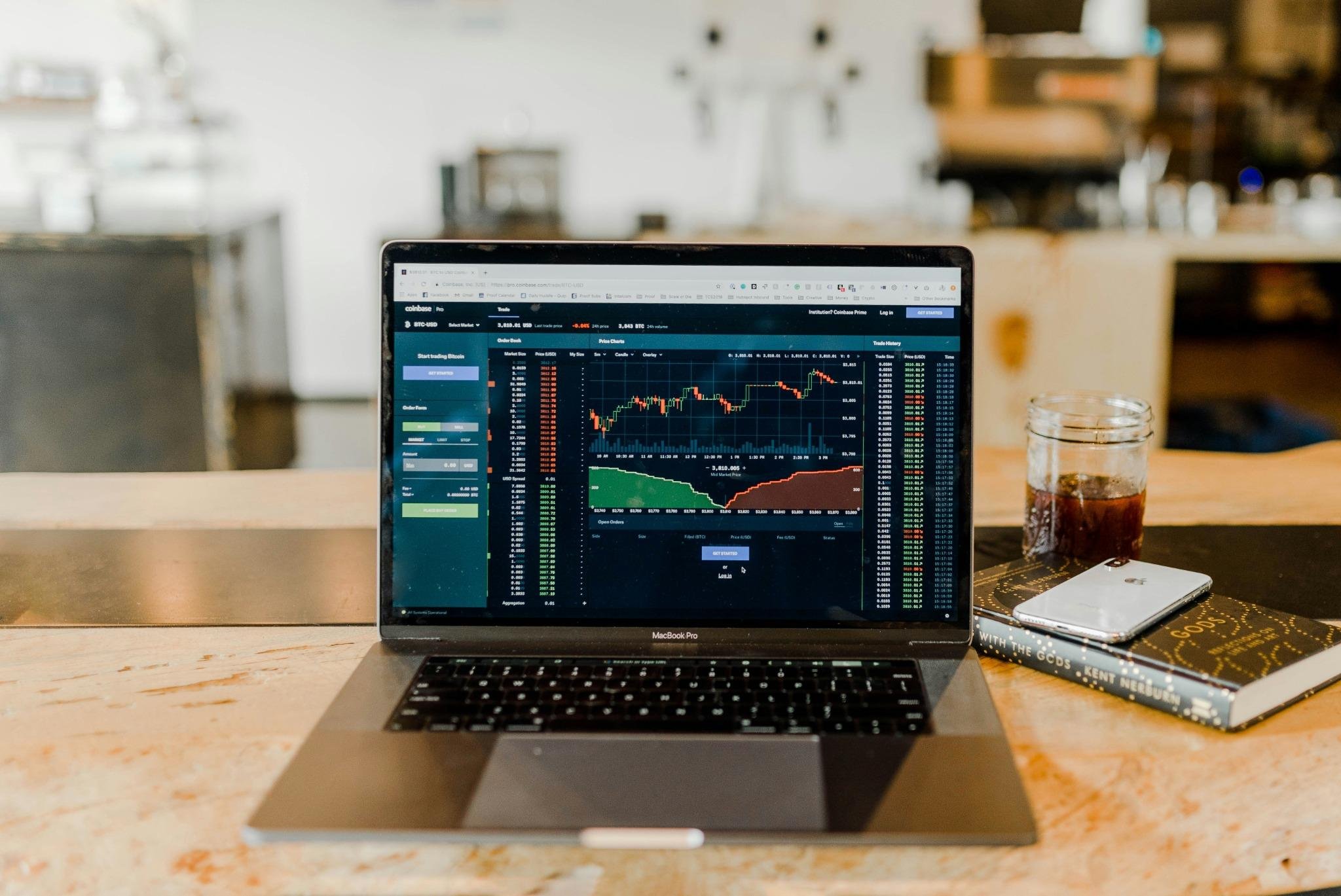
Is this time really different? The best bet will likely continue to be a core equity portfolio of low-cost, internationally diversified index funds. If you have FOMO or are comfortable risking more for a potential AI-driven upside be sure it’s not more than 5-10% of your portfolio. Photo by Austin Distel on Unsplash.
Conclusion: Building a Resilient FIRE Path in the Age of AI
The rise of AI looks to be more than another tech wave. It simultaneously accelerates productivity, threatens displacement, and lowers entry barriers to entrepreneurship. For FI/FIRE, this creates both risks and opportunities: jobs will be disrupted, portfolios may become more volatile, but the upside is also huge. The antifragile mindset is to scenario-plan, stay up to date, diversify, and see AI not just as a threat but as a toolkit for optionality.
But at a deeper level, AI forces us to revisit why we work and why we decide to pursue FIRE. AI does hold the potential to negatively disrupt many jobs—but who actually enjoyed working in those? 79% of global employees did not find engagement or meaning in them in the first place. Could this be an opportunity for some soul-searching to find something we do find meaningful? The barriers to entry have never been lower.
For those on the path to FI/FIRE, the takeaway is to embrace adaptability—learn AI tools, hedge risks, and build optionality. The incredible range of knowledge, resources, and tools available to us for free allow us to be less reliant than anytime before in human history from our job. But we need to take active steps to make this true. If we live paycheck to paycheck without an emergency fund, then all these new developments won’t matter.
For those already FI/FIRE, the challenge is to balance exposure to innovation with diversification and discipline. It’s also about staying the course, while paying attention to the changes taking place. If there is some major reorganization of our economy or how society works, FI folks will still be best placed to navigate this challenge.

The rise of AI could potentially change everything—the question is to what extent. It’s still too early to tell, so let’s prepare for every scenario.Photo by fabio on Unsplash.
Finally, for all of us—whether full FI/FIRE or on the path there—there is an invitation to rethink work, meaning, and human flourishing in an age where algorithms are already shaping much of our environment: do we want to proactively shape the algorithms to positively impact our personal lives—proactive algorithmic living—or wait until others do it on our behalf for their profit and at the cost of our well-being?
In the end, each technological revolution—from the printing press to the internet—has reshaped how we live, but what always remains constant is the need for sound judgement. Tools will come and go, but our ability to discern what matters, to act with fairness with others, courage, and self-control, will always anchor us.
The Stoics understood this well—while we cannot control the pace of change, we can control our attitude and response to it. In the age of AI, cultivating judgement and wisdom may be the most valuable investment of all—ensuring FI is not just about freedom from work, but about living well in a changing world.
💬 I'd love to hear your thoughts—How do you see AI shaping your path to FI or your post-FIRE life? Do you feel it’s an accelerator, a risk, or an opportunity to seek deeper meaning in our lives? Please let us know in the comments!
If you enjoyed this article, here are some next steps:
👉 New to Financial Independence? Start with our complete guide to FI and FIRE
👉 Want to think more deeply about work, meaning, and designing a career on your own terms? See our complete guide to work, purpose, and Financial Independence
👉 For the full investing framework in any market environment: our complete investing guide for FIRE
👉 Use our free FI Calculator (email unlock) to model how a higher savings rate shortens your timeline
👉 Subscribe to get free FI tools and the weekly newsletter (one-click unsubscribe anytime)
👉 Browse 130+ articles at The Good Life Journey.
🌿 Thanks for reading The Good Life Journey. I share weekly insights on personal finance, financial independence (FIRE), and long-term investing — with work, health, and philosophy explored through the FI lens.
Disclaimer: I’m not a financial adviser, and this is not financial advice. The posts on this website are for informational purposes only; please consult a qualified adviser for personalized advice.

Proactive algorithmic living in some areas such as health could be very beneficial for some. Photo by Angelina Sarycheva on Unsplash.
Check out other recent articles




























About the author:
Written by David, a former academic scientist with a PhD and over a decade of experience in data analysis, modeling, and market-based financial systems, including work related to carbon markets. I apply a research-driven, evidence-based approach to personal finance and FIRE, focusing on long-term investing, retirement planning, and financial decision-making under uncertainty.
This site documents my own journey toward financial independence, with related topics like work, health, and philosophy explored through a financial independence lens, as they influence saving, investing, and retirement planning decisions.
Frequently Asked Questions (FAQs)
-
AI accelerates productivity, lowers barriers to entrepreneurship, and reshapes jobs. For FI seekers, it can speed up income growth or side hustles. But it also creates risks like job displacement and market volatility, requiring strategic planning and flexibility.
-
AI can shorten the path to FIRE by boosting productivity and lowering costs of starting businesses. At the same time, it may disrupt careers, forcing workers to adapt faster. For retirees, it may mean more volatile but opportunity-rich portfolios.
-
Retirement planning must account for disruption in careers, possible tax changes, and new investment risks. AI could also extend working years for those who embrace it, while making entrepreneurship a more viable retirement path.
-
AI has boosted valuations of major firms like Nvidia and Microsoft. While this fuels growth, it also risks bubbles. Broad diversification across global index funds remains the safest way to capture long-term winners without overexposure.
-
White-collar jobs like programming, consulting, legal, and analysis are among the most exposed. Manual trades, caregiving, and jobs requiring in-person skills remain safer, though robotics could gradually expand disruption.
-
Jobs requiring physical presence, human care, or creativity outside of automation—like electricians, therapists, and skilled trades—are safest for now. However, no job is entirely risk-free as robotics and automation advance.
-
The best protection is adaptability: learn AI tools, diversify income, and build savings. An emergency fund and entrepreneurial experiments help hedge against layoffs. Treat AI as a partner, not a threat.
-
AI could improve efficiency and profits, but also increase inequality and volatility. For financial stability, individuals should prioritize diversification, scenario planning, and flexible withdrawal strategies in retirement.
Join readers from more than 100 countries, subscribe below!
Didn't Find What You Were After? Try Searching Here For Other Topics Or Articles: