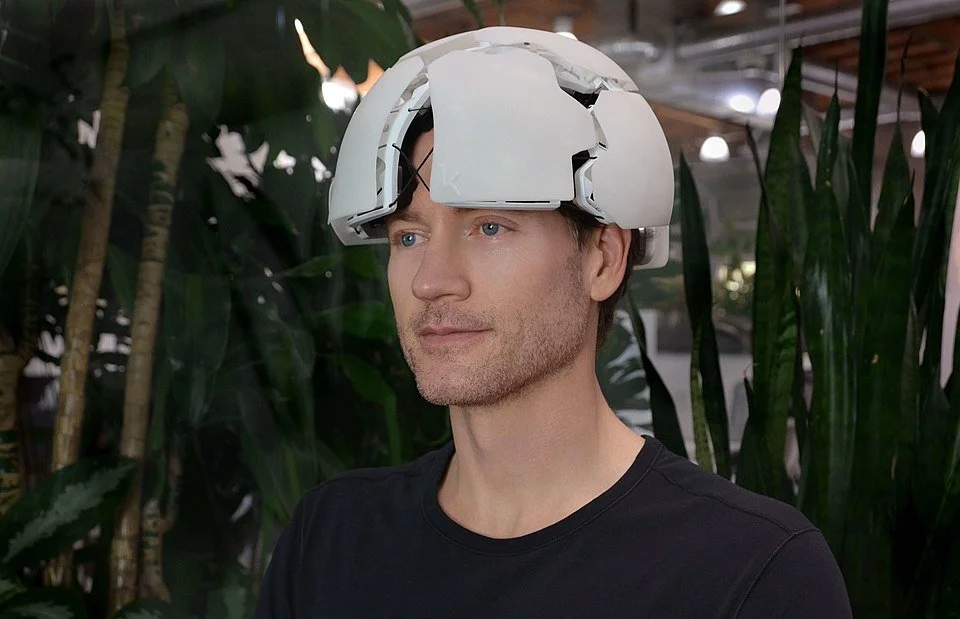
Entrepreneur Bryan Johnson’s personal health routine is certainly extreme, but what about his philosophy? “The mind is dead”. Photo from Wikimedia Commons.
Reading time: 7 minutes
Quick Answer: What Is Bryan Johnson’s “Algorithmic Living”?
Bryan Johnson’s idea of algorithmic living means using predefined rules, routines, and data-driven systems to make health decisions automatically instead of relying on daily willpower. His claim that “the mind is dead” doesn’t mean the mind stops working—it means human decision-making is often unreliable for long-term health, so structured habits can produce better outcomes. While Johnson’s Blueprint routine is extreme, most benefits come from simple consistency in sleep, food, and exercise that anyone can apply.
What You’ll Get From This Article
✔ A clear explanation of what Bryan Johnson means by “the mind is dead”
✔ A practical definition of algorithmic living beyond the hype
✔ The useful lessons inside Johnson’s extreme Blueprint experiment
✔ Scientific and behavioral insights on habits, sleep, and longevity
✔ Balanced risks, downsides, and philosophical concerns
✔ Simple ways to apply structured health habits without extremes
TL;DR — Algorithmic Living & Health
🧠 Human decisions often favor short-term comfort over long-term wellbeing
⚙️ Algorithmic living replaces willpower with consistent, repeatable systems
🥗 Sleep, nutrition, and exercise routines drive most health outcomes
📉 Extreme tracking isn’t required to gain real benefits
🧭 The goal isn’t control—it’s freedom from constant decision fatigue
🌿 The healthiest path is likely a middle ground between discipline and automation
👉 This article is part of our Health & Longevity pillar—the complete guide to healthspan, longevity science, and how it connects to your FIRE (Financial Independence, Retire Early) plan.
“The Mind Is Dead”: could Algorithmic Living Transform Our Relationship with Food and Health?
Bryan Johnson’s claim that “the mind is dead” sounds extreme—but it points to a practical idea: algorithmic living, or using clear rules and systems to make healthier decisions automatically.
In this article, you’ll learnwhat Johnson really means, how algorithmic living works in food, sleep, and habits, and how to apply the useful parts without needing to copy his extreme Blueprint routine. Johnson describes his Blueprint approach as removing unreliable human decision-making from health, and replacing it with measurable protocols aimed at longevity.
The key question isn’t whether Johnson’s routine is realistic for most people—it isn’t—but whether the underlying principle of structured, repeatable health systems actually works and what we can learn from it.
From my experience, the biggest surprise in trying to implement some of his ideas wasn’t physical, but mental. Once a few health decisions became automatic, I stopped negotiating with myself every day. I’ve appreciated the reduction in mental noise and increase in headspace just as much as any improvement in weight, sleep, or fitness.
Why the Modern Mind Struggles With Food, Habits, and Health Decisions
Some days I feel like my mind is drowning in input. Daily news, emails, podcasts, YouTube videos, and now AI tools like ChatGPT are feeding us endless streams of information. Layer social media on top, for those that use, it and it’s no wonder we’re feeling mentally overloaded and consider implementing information diets.
At the same time, rates of anxiety, depression, and burnout are at record highs. Of course, it’s not a coincidence, and the two are highly correlated. In a world where our minds are overloaded with stimuli and our attention is fragmented into microseconds, even choices like “What’s for lunch?” can be more taxing than they should.
This is where Bryan Johnson’s provocation, “The mind is dead” caught my attention. On the surface, it sounds like something very extreme to say, and it’s clear he’s drawing parallels from Nietsche (“God is dead”). But if you stick with me in this post, I’ll explain why I’ve come to see it as a kind of mercy: if our minds are already overworked and prone to self-sabotage—more on this later—then maybe letting our minds “retire” from certain decisions can be viewed as an act of kindness.
Today’s post is not about dissecting Bryan Johnson’s detailed health routine but about exploring the deeper idea behind “the mind is dead” and what algorithmic living might mean for our daily choices. Algorithmic living applies these ideas in practice—using intentional, repeatable systems to make healthier, more consistent decisions with less reliance on willpower.
In practice, this can include fixed meal routines, sleep schedules, exercise rules, and data-driven health tracking—all designed to reduce reliance on willpower. Preventive-health research consistently shows that regular sleep, consistent exercise, and whole-food nutrition are among the strongest predictors of long-term health—supporting the logic behind structured, repeatable routines.

An algorithm is a set of rules or steps that help you make decisions or solve problems—whether in computers or in life. Photo by Markus Spiske on Pexels.
For me, the idea of algorithmic living clicked most clearly in the food and health area. Over ten years ago, I struggled with a former partner that suffered from bulimia—a severe eating disorder. As a result of going through that together, I became quite attuned at observing mild eating disorders in others.
Mild forms of disordered eating are all around us—and I’m not immune to them either. Many of us translate our emotions and difficulties and—to very different degrees—use food or drink as a means of escape. Who hasn’t caught themselves binge eating at some point without even realizing it—while their minds were somewhere else? Processing human emotions is difficult, and food has become one of the most common outlets in modern society.
What’s interesting to me is that we view the human mind as something rational, but the mind is actually consistently trying to self-sabotage us. It’s like an ongoing negotiation between “healthy you” and the inner voice lobbying for comfort over discipline. Notice that this voice almost always argues for short-term gratification, even when it’s at the expense of your long-term health and happiness. How can this be if our mind is rational?
Part of the answer lies in evolution: our ancestors lived with scarcity, so their minds were wired to grab high-calorie food and opportunities the moment they were available. In today’s world of abundance, though, that ancient programming often works against us. Understanding where these impulses come from helps explain why we need better systems to counter them.

Our human ancestors lived in a context of scarcity and their minds developed over millennia to prioritize high-calorie foods when available. Photo by Jeremy Bishop on Pexels.
Why the “Rational” Mind Often Works Against Us
We like to think our minds are logical and as always having our best interests at heart. But as Johnson provocatively points out, the mind often has our worst interest at heart. Left unchecked, the mind may be like a smooth-talking salesman pitching for habits that harm us—"Go ahead and have a second helping of ice cream,” “Why should we go running today when we can go tomorrow?,” or “Why not stay up 30 minutes more and watch one more episode?”
What’s the harm in any of these examples? Individually and at a single point in time, very little. The problem is that the mind’s voice will nearly always offer these suggestions that are not in our best interest unless we apply either iron discipline or have systems in place to counter it.
Food, alcohol, gambling, porn, or endless scrolling on social media are not fringe problems. They are mainstream coping mechanisms in modern life, and the truth is that they thrive on a mind that prefers instant gratification. Like pretty much anyone, I’ve seen both sides of this personally. I’ve had mild struggles—nothing extreme—with food, scrolling, and even porn when I was younger.
When Johnson says the mind is “dead”, it’s not about literal death—but about removing its “veto power” over the basics. We see a clear echo of Nietzsche’s “God is dead” here: Nietzsche didn’t mean God had physically died, he meant that our cultural relationship with God had changed—our moral compass was now in our hands, not in God’s.
Analogously, saying “the mind is dead” is about reframing our relationship with the mind: given the substantial evidence we’ve found for it not having our best interest at heart, the mind should no longer be the ultimate authority on what is good for us. In some areas of our lives, well-designed algorithms that we set can become a more trustworthy guide.
Understanding the mind’s limitations naturally leads to a deeper question: what happens when we redesign our goals instead of fighting our impulses?

We already live in an algorithm-led world. TikTok, YouTube, and social media already use algorithms that keep us scrolling, not thriving. Why not proactively design and implement our own algorithms that we know are good for us instead? Photo by Vardan Papikyan on Unsplash.
From Weight Loss to Longevity: The Mindset Shift That Changes Health
As mentioned, I used to have mild relationship issues with food. I would routinely go through cycles of gaining weight and losing weight. Perhaps I’d manage to stay healthy and eat very well for two weeks, but then I’d slip and overeat for the next two. This is no longer the case—for the last two years, I no longer go through these cycles and don’t experience any anxiety related to food. What changed it for me?
I think the real mindset shift for me happened when I stopped chasing “looking good”—think, thin, trying to display abs, or at least not showing much fat—to chasing longevity and being healthy instead. The irony is that the moment I let go of the former and started chasing the latter, I’ve managed in my late 30s to be in the best health and shape of my life—and free from food-related anxiety.
Now I reframe my food decisions through the lens of “Is this healthy or unhealthy?” or “Will this increase my lifespan and healthspan or will it shorten them?” It’s no longer a lens of “Do I deserve it or not?” or “Have I done enough exercise to justify this treat or not?” Becoming a healthy person has been added as part of my identity, so I no longer need to entertain these questions. If it helps me live better and longer, I’ll generally eat it. If it doesn’t, I prefer not to buy it in the first place.
This, in a small way, is algorithmic living—it’s aligning your daily choices with your goals, values, and the things you care about. In my case, it hasn’t been about counting every single calorie or consulting a spreadsheet before lunch, but about installing safeguards and guiding principles that bypass all the mental back-and-forths.
And it works. I no longer experience anxiety related to food and I feel lighter—not just physically but mentally. It’s freed up headspace so I can focus on other aspects of life. In my experience, implementing some of Johnson’s low-hanging fruit advice is a very good idea—it has improved my blood pressure, heart resting rate, sleep, and mood.
I’m clearly living a healthier life as a result of applying some principles of algorithmic living, but is it really a good thing to embrace algorithmic living? That brings us to Bryan Johnson’s “Blueprint”—perhaps the most famous and extreme example of algorithmic living in practice.

Don’t rely on willpower for your weekly exercise. Set a weekly fitness routine that is aligned with your health and longevity goals and then implement it like an algorithm. When the time comes, there is no time to second guess it, you just do it, because that’s who you are—a healthy person. Photo by Alonso Reyes on Unsplash.
Bryan Johnson’s Blueprint: Can Algorithmic Living Automate Health?
It’s true the Bryan Johnson’s “Blueprint” lifestyle takes this to the extreme: many dozens of daily supplements, pre-measured vegan meals, rigorous biomarker tracking, daily exercise protocol, and a schedule that is run with the precision of a science experiment—which it is.
Of course, you don’t need to copy his entire regimen to see major results. Like most things in life, the 80/20 rule applies—you’re likely to get 80% of the benefits from 20% of his health practices, many of which are simple, common-sense principles related to sleep, exercise, and nutrition. It’s a fallacy to dismiss his whole philosophy just because the most visible version is very extreme.
For most, I think it’s unrealistic—for now, at least—to implement this level of intensity, but the overarching principle is certainly compelling: if you manage to automate the right and healthy decisions, you stop giving your mind opportunities to argue against your own well-being and future interest.
This means never standing in the grocery store debating which snack is “not that bad” for you. Think of it as having a “human algorithm”—a set of personal rules that guide your daily actions toward long-term health and happiness.
The key is that these systems are proactive—you design them for your benefit. That’s a world apart from the algorithms others set for us for their gain, like TikTok’s endless feed or YouTube’s auto-play, which are engineered to keep us scrolling, not thriving.
Imagine not relying on willpower at 10pm in front of the fridge. This used to be me sometimes, but now I have a specific system in place instead. I follow 16/8 hour-fasting routine, so after dinner I simply do not eat again until at least 16 hours have passed. Fasting is an important element in my routine to sleep better, be healthier, feel better, and live longer. So, I won’t compromise that with a 10pm snack.
Algorithmic living in such a complicated domain such as food and health is not about losing freedom to choose your snack—it’s about freeing yourself from the most common traps your mind sets for you. In my experience, once those traps are gone, you reclaim attention for creativity, relationships, and the parts of life that actually matter.
Still, there’s a legitimate concern here. Health optimization can drift into over-measurement, anxiety, or loss of spontaneity if taken too far. The most sustainable version of algorithmic living is probably not total control, but structured habits combined with human flexibility. In other words, systems should support life—not replace it.

Algorithmic living applied to food is not meant to take away your freedom—it’s meant to free yourself from the most common traps of the mind. Photo by Stefan Vladimirov on Unsplash.
Can Algorithmic Living Fit Into Culture and Tradition?
One common fear could be that algorithmic living, especially in food, could erase culture and tradition. But I don’t think it has to. Imagine a Mediterranean diet algorithm that keeps olive oil, fresh fish, and seasonal vegetables central—only now with more precise portioning and nutrient optimization. Or one that prioritizes certain healthier Mediterranean dishes over less healthy ones.
Rather than replacing cultural richness, algorithms could also help protect and spread them. A Parisian baker could develop a “Blueprint-approved” baguette. An Indian chef could fine-tune spice blends for optimal anti-inflammatory impact.
Instead of our current baseline—where fast food globalization is erasing diversity—we could see algorithmic localization, which aims to keep the soul of a cuisine while enhancing its health benefits.
And remember, culture is not static—it’s shaped by changing technology and science. Whatever culinary tradition you hold dear today probably didn’t exist 500 years ago, yet people were no less human then than they are today. As our understanding of health improves, it’s natural for traditions and our “food algorithms” to adapt and change.
Finally, remember that algorithmic living is already here, so what matters is how we implement it. If you’re like the majority, algorithms are already serving you personalized news, entertainment, and social media updates that are catered to your unique profile. Algorithms in TikTok or YouTube already influence what you watch, what you think, and who you are.
There is nothing inherently wrong with technology—it’s about how we implement it. Instead of passively embracing damaging algorithms that lead to doomsday scrolling or a bombardment of dopamine hits, why not proactively choose which algorithms we want to define which aspects of our lives? Especially when they are going to make us feel better and live longer.

Does algorithmic living make us less human? We don’t need to take things to the extreme—by going to some form of monitored life. Instead, start out by setting some basic algorithms or guardrails in the areas you struggle with or that matter most to you. Photo by Angelina Sarycheva on Unsplash.
Does Algorithmic Living Reduce Human Freedom—or Increase It?
Some may still push back, just on the notion that outsourcing decisions to algorithms could make us less human. But think about GPS. Once upon a time, navigating a city meant memorizing the names of streets, watching the sun’s position in the sky, and keeping mental (and physical) maps. Now we follow turn-by-turn directions without a second though.
We did give in a bit of agency there—does that make us less human or are we just more efficient at getting to our destination? History is full of these moments: horses to cars, herbs to pharmaceuticals, plows to tractors. Each time, we let go of a “human” skill in exchange for more time and energy for other pursuits. Are we less human now than we were 500 years ago?
If you’re a chef, maybe algorithmic eating doesn’t appeal to you—and might even take away something you love. Fair enough. But for the rest of us, removing the constant low-grade stress of food decisions could mean more mental space for art, reading, conversation, travel, or anything that feeds the soul.
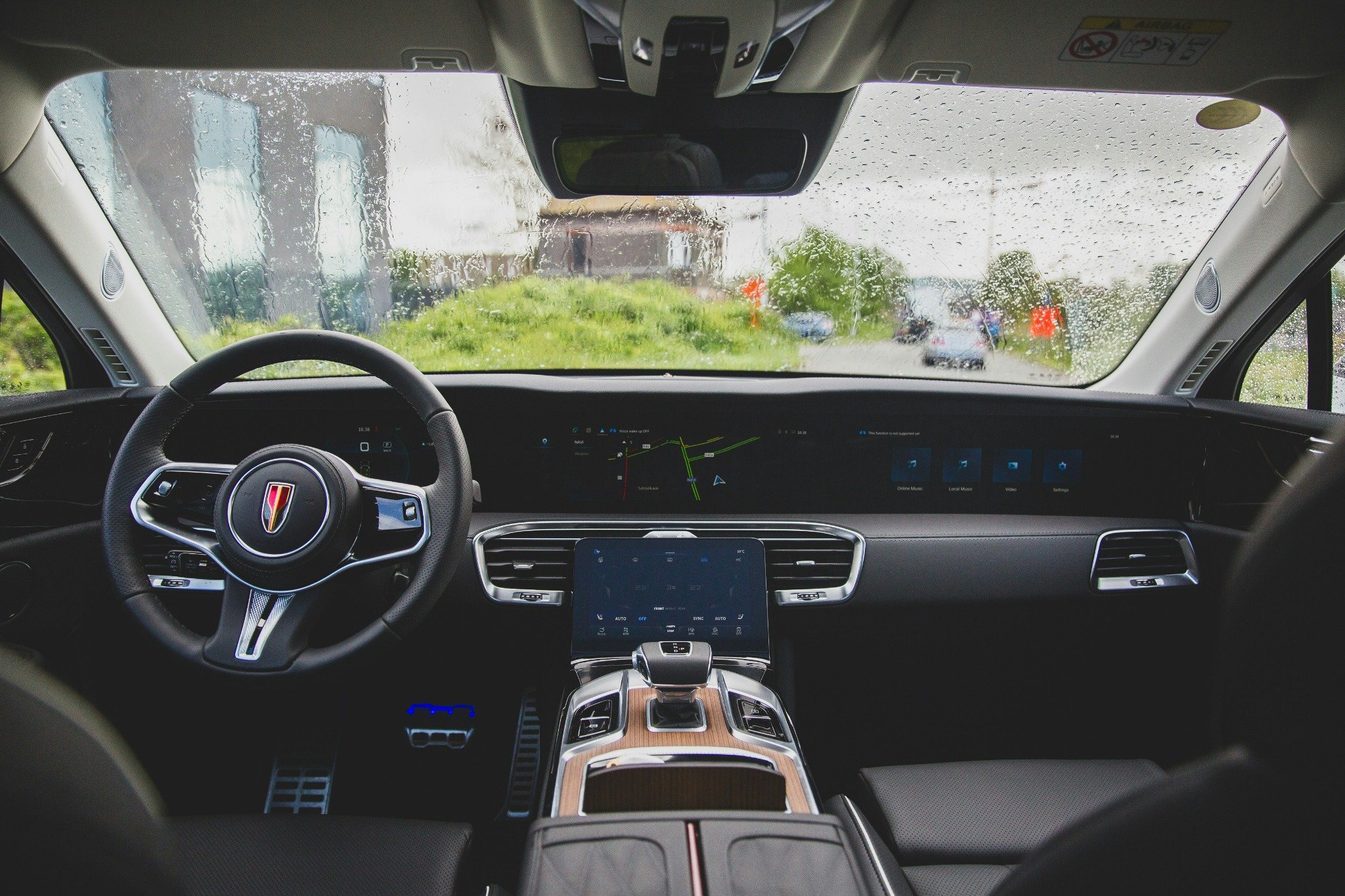
Did any of these technological advancements make us “less human”? Photo by Bram Van Oost on Unsplash.
Beyond Food: Algorithmic Living for Sleep, Fitness, and Recovery
Today, we’ve narrowly focused on algorithmic living applied to food, but it doesn’t need to stop there. Sleep duration and regularity alone are strongly associated with cardiovascular health, metabolic function, and lifespan in large population studies.
Sleep trackers can detect when you need an earlier bedtime and adjust your environment. Fitness apps can adapt your training plan based on your personal recovery metrics, not willpower. Recovery protocols—from cold plunges to targeted supplements—could be triggered automatically by inflammation markers.
I’ve started applying small versions of algorithmic living to myself: more consistent and earlier bedtime routines, scheduled workouts, or more intentional cooking. The way I see it, the less mental effort I spend on making these decisions—and on second-guessing if I’m doing them right—the better. A future post will focus more specifically on low-hanging fruit health routines.
Over time, these habits compound, just like investments. The payoff isn’t just physical—it’s the mental clarity that comes from knowing your health foundation is rock-solid and you can focus on something else.

Meditation reminds us that we are not out thoughts—nor our mind. The algorithmic living espoused by Brian Johnson takes this same stance and advocates for proactively shaping environments and rules that enable healthy outcomes. Photo by Patrick Schneider on Unsplash.
The Mind as Adversary—and Ally, Once Freed
Left to its own devices, the mind is pretty good at sabotaging us in the name of comfort. But when we take away its authority to meddle with certain decisions, it becomes available for what it does best: problem-solving, creating, and imagining.
Meditation teaches us that we are not our thoughts—we are not our mind—and algorithmic living takes a similar stance, proactively shaping environments and rules so that healthy choices happen automatically.
As James Clear notes in Atomic Habits, lasting change comes from shifting your identity, not just your actions. Once you see yourself as a healthy person, your decisions naturally align without endless willpower battles.
That way, the mind can focus on higher-order thinking instead of rehashing the same food debate in front of the fridge for the thousandth time.In the world we currently live in, where distraction is the default, proactively implementing algorithmic living can be one of the most human things we do.
If this article resonated, here are a few next steps:
👉 See how many years you really have of healthy life after retirement
👉 Explore Medicine 3.0 and the Four Horsemen of longevity
👉 Subscribe to The Good Life Journey for weekly insights and free FI tools
💬 I'd love to hear your thoughts—what do you think about algorithmic living? Would you apply it anywhere in your life? If you’re against it, have you been successful at avoiding how others algorithms affect your life? Please let us know in the comments!
🌿 Thanks for reading The Good Life Journey. I share weekly insights on personal finance, financial independence (FIRE), and long-term investing — with work, health, and philosophy explored through the FI lens.
Disclaimer: I am not a health professional, and the content in this website is for philosophical discussions and informational purposes only. Please consult a qualified health professional for personalized advice tailored to your situation.
Check out other recent articles




























About the author:
Written by David, a former academic scientist with a PhD and over a decade of experience in data analysis, modeling, and market-based financial systems, including work related to carbon markets. I apply a research-driven, evidence-based approach to personal finance and FIRE, focusing on long-term investing, retirement planning, and financial decision-making under uncertainty.
This site documents my own journey toward financial independence, with related topics like work, health, and philosophy explored through a financial independence lens, as they influence saving, investing, and retirement planning decisions.
Frequently Asked Questions (FAQs)
-
Bryan Johnson uses the phrase “The mind is dead” to describe the idea that our minds, left unchecked, often make decisions that work against our long-term health and goals. Just like Nietzsche’s “God is dead” wasn’t literal, Johnson’s concept is about changing our relationship with the mind—no longer treating it as the ultimate authority on what’s good for us. Instead, we can design systems and habits that bypass the mind’s short-term cravings in favor of long-term well-being. In practice, this means replacing constant decision-making with predefined routines that keep us on track.
-
Algorithmic living is the practice of designing your daily routines, choices, and environment so that healthy and productive actions happen automatically. It’s about proactively setting up systems for your benefit, rather than letting outside forces—like social media algorithms—dictate your behavior for their gain. This can involve simple habits like meal prepping, scheduled workouts, or automated bedtime routines. The goal is to reduce decision fatigue and ensure your actions align with your values and long-term goals.
-
Not at all. Bryan Johnson’s Blueprint is a highly detailed and intense health regimen, but the underlying principles can be applied in a much more moderate way. By focusing on the 80/20 rule, you can likely achieve 80% of the benefits by implementing just 20% of his suggestions—especially the common-sense ones around sleep, diet, and exercise. The key is to adopt what fits your life and goals, rather than copying his plan in full.
-
By removing constant small decisions from your day, algorithmic living frees up mental energy for creativity, relationships, and meaningful work. It also ensures that you consistently make choices that are aligned with your health and longevity goals. This consistency compounds over time, leading to measurable improvements in physical well-being, mental clarity, and emotional stability. Many people find they experience less anxiety and more satisfaction once they eliminate daily debates about food, exercise, and routines.
-
Algorithmic living doesn’t require extreme routines or constant tracking. Most benefits come from simple consistency—regular sleep, predictable meals, and scheduled exercise. Bryan Johnson’s Blueprint represents an experimental extreme, but the core principle can be applied in a much lighter way. For everyday life, structure matters far more than perfection.
-
If taken too far, strict routines can create rigidity, anxiety, or reduced social flexibility. Healthy systems should support real life—not replace culture, relationships, or spontaneity.
The most sustainable approach combines clear habits with room for variation. Balance is what protects long-term wellbeing. -
Discipline depends on repeated effort in the moment. Algorithmic living reduces effort by deciding once and automating the behavior. This shifts change from motivation to environment and routine. Behavioral research consistently shows that consistent systems outperform bursts of willpower.
-
Yes. The same logic applies to finances, productivity, and digital habits—any domain with repeated decisions. Automatic savings, scheduled deep-work blocks, or limits on screen time all function as personal algorithms. These systems reduce mental load and create steady progress. Health is simply the most visible starting point.
Join readers from more than 100 countries, subscribe below!
Didn't Find What You Were After? Try Searching Here For Other Topics Or Articles: