Retiring in Denmark vs Germany: Can Low-Cost Homes Beat Higher Taxes?

Main street in Ærøskøbing, Denmark. Source: https://kulturringen.dk/
Reading time: 9 minutes
Quick answer
Retiring in Denmark instead of Germany can work financially—but only under specific conditions. Cheap coastal housing in Denmark can dramatically reduce your required portfolio, but higher living costs and Denmark’s mark-to-market investment taxation can offset part of the advantage.
For many FIRE households, the decision comes down to three levers: housing costs, ongoing cost of living, and how your investment portfolio is taxed after relocation.
What you’ll get from this article 🇩🇰🇩🇪
✔ Real housing price comparison (Ærø vs Germany)
✔ Cost-of-living differences that affect retirement budgets
✔ How Denmark’s portfolio taxes actually work
✔ When cheap property really does beat higher taxes
✔ Key risks (liquidity, isolation, foreign buyer rules)
✔ A practical framework to test your own relocation math
TL;DR — Denmark vs Germany for FIRE 🧮
🏡 Danish coastal homes can be dramatically cheaper than comparable German property
💸 Denmark’s yearly mark-to-market taxation is the biggest structural disadvantage
📊 Switching to distributing ETFs can significantly reduce the Danish tax drag
🧾 Cost of living is typically ~10–25% higher in Denmark depending on location
⚖️ For some FIRE households, housing savings can still outweigh higher taxes
🧠 The decision only works if you model your personal numbers carefully
👉 Considering retiring abroad more broadly? For the full geographic arbitrage framework—including lower-cost regions, timeline impact, taxes, seasonal options, and global rankings—start with our comprehensive guide to retiring abroad through geographic arbitrage.
Early Retirement in Denmark vs Germany: Can the Numbers Work?
If you’re chasing Financial Independence (FI) and considering a move from Germany to Denmark in retirement—or you’re simply interested in what a move from city to countryside could look like financially—this post is relevant for you.
We compare property prices, everyday living costs, and, crucially, the very different investment tax systems in Germany and Denmark. By the end you’ll know whether the dream of a €300k seaside home in Denmark is a feasible early retirement dream or whether the Danish tax system simply breaks the math.
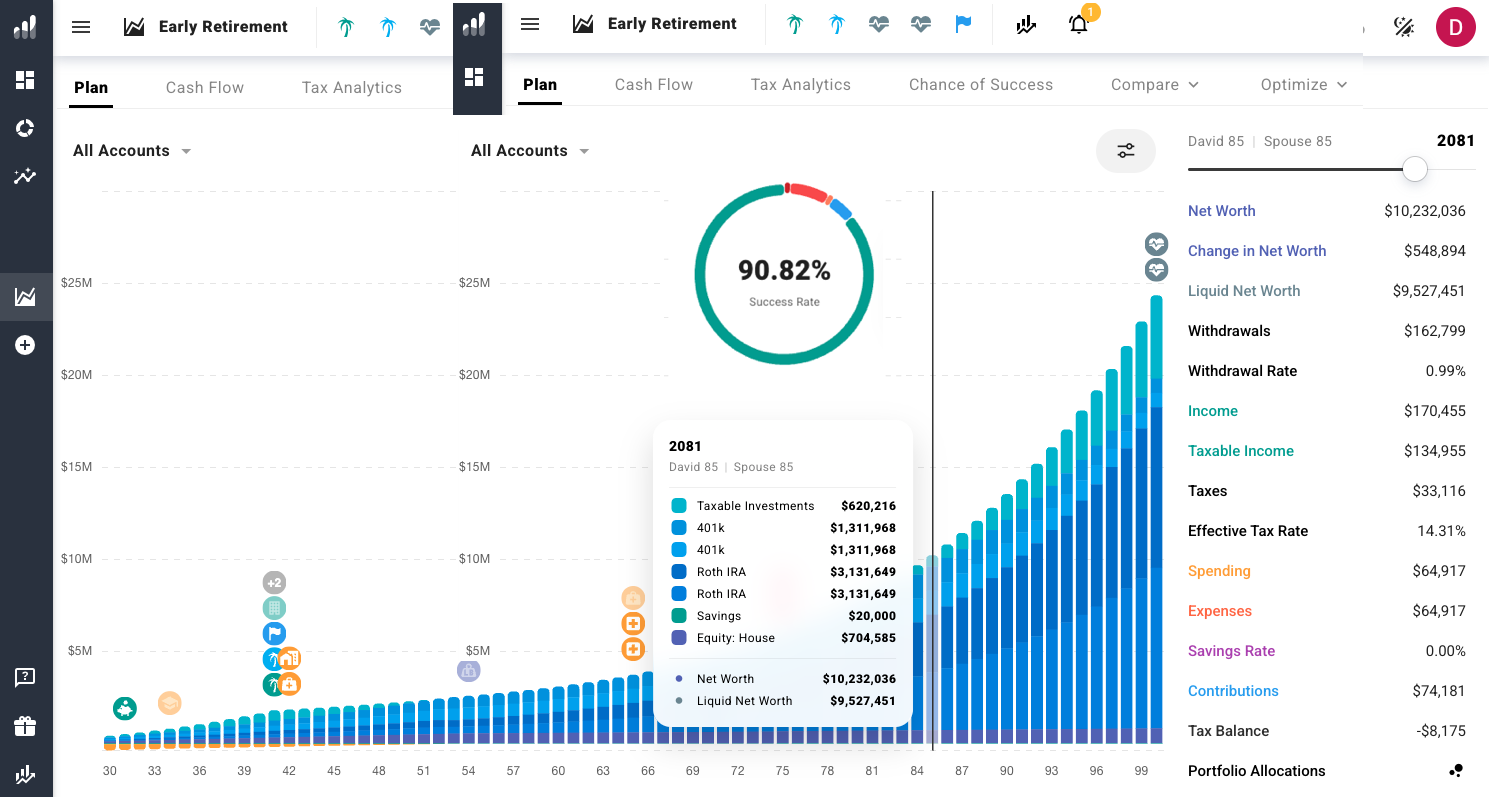
If you want to test how a move like this would affect your own numbers, you can estimate your personal FIRE timeline with our calculator (linked at the end of the article).
This article looks specifically at the post-FIRE stage (Financial Independence, Retire Early)—how taxes, cost of living, and housing affect the ability to live in Denmark on an already-built investment portfolio. This article is not a guide to pursuing or accumulating toward FIRE in Denmark.
Cheap Danish Property: Can Ærø Housing Beat Germany?
I recently returned from Denmark, after marrying and spending some holidays on the island of Ærø. Have you ever had that feeling when travelling abroad that you’d actually consider relocating there in a heartbeat? It doesn’t happen very often for me—I genuinely like where we live—but it did in the case of Denmark and the beautiful (and remote) island of Ærø, often highlighted by Danish travel writers for its charm.
Think of beautiful landscapes, seaside in every direction, dreamy towns out of a fairy tale, and cheerful and friendly people—not too surprising, since Denmark ranks 2nd globally in terms of happiness scores. And then layer on top very cheap real estate prices: for €300,000 you get a very large, charming house / farmhouse with land and a view of the sea (see image below).
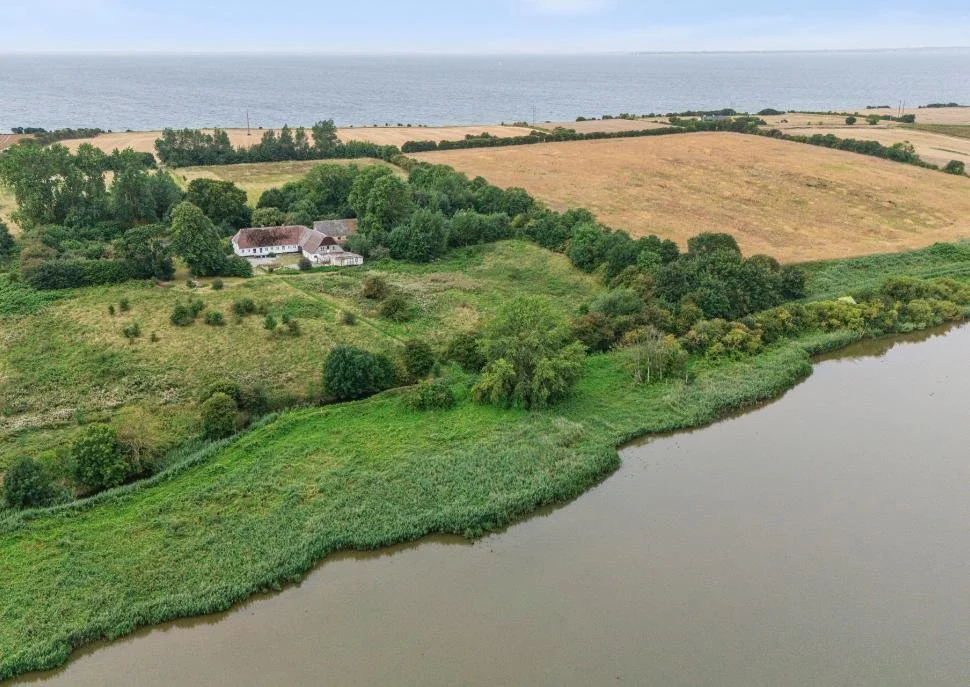
Living the dream? Home for sale on Ærø, with sea views on both sides of a peninsula. Living area 143 m²; land 2.5 ha; price €300,000. Picture of interior in image further below. What is the catch? Source: https://www.estate.dk/
When I see this, my brain just short-circuits. In the suburban area around Berlin (think 50-80km away from the city) you can get a very average, not-at-all charming mid-size property with a small garden for about €700,000. If you’re lucky, you might be able to get something comparable to the Danish property in a very remote, rural area in Germany, though it’s unlikely you’d be anywhere near the sea.
And it wasn’t just the property price numbers. The vibes on the island were almost “Mediterranean” in a northern way—people actually stop to greet and smile at each other, English is easy, there is a solid biking culture, and generally the place appears to be largely stress-free.
Naturally, the geo-arbitrage question popped into my mind: if housing is that much cheaper, could Denmark actually beat Germany as a retirement destination once we reach Financial Independence (FI)? If the housing problem we experience in so many areas of Europe were solved, would everything else get financially easier? As I’ve mentioned in previous posts, we’re currently renting but do experience real estate FOMO and would definitely consider buying at those prices.
What would the post-FI phase look like in Denmark with a fully bought property? Would this be favourable compared with retiring in Germany, despite Denmark’s higher cost of living and taxes?
This is the main question we’re addressing today. We’ve started out with the intoxicating property, but we’ll now layer in how the cost of living affects the retirement equation, and also ask the question that may end up deciding the whole thing: how do Danish portfolio taxes affect a FIRE plan and how does it compare to retiring in Germany?
I’m aware that this isn’t the classic early-retirement fantasy—most people dream of heading south for cheap sunshine in Portugal, Spain, or Greece. Picking windswept Danish islands definitely feels contrarian. Yet Ærø’s maritime climate is often milder in winter and cooler in summer than, for instance, Berlin’s more continental weather.
And with climate change negatively impacting some of the more traditional retirement hotspots in Europe—bringing more frequent heatwaves, floods, and wildfires in many regions of southern Europe—a breezy northern refuge could end up being the smarter long-term bet. For some, this is also a reason for wanting to pursue seasonal geoarbitrage—using flexible, climate-friendly relocation to protect both lifestyle and your long-term budget.
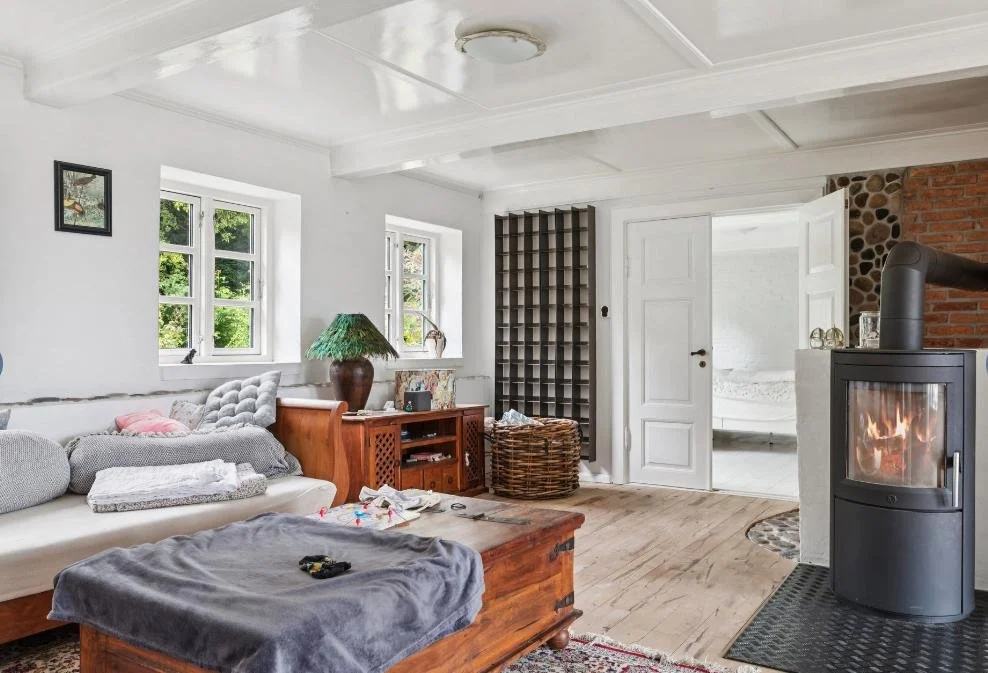
House interior of property shown above. Danish homes are really cozy—this is a Danish concept known as “hygge”. Source: https://www.estate.dk/
Hidden Costs of Buying a €300k Danish Dream Home
We’ve already covered the positive aspects of buying a house in the price range of what I presented above. There are tons of large, tastefully-decorated houses with land for sale in the €200-400k range right by the sea. Again, you could get something comparable—but without the sea part—in a very rural area in Germany for around €500-700k. Something comparable where I live or within the vicinity of an urban area would certainly be substantially north of €1M.
But there are certainly less romantic aspects to consider before jumping on the €300k property. Firstly, consider that it’s not just the property sale price you’re paying for. You will also have to pay for annual maintenance costs (1-2% of home value annually) and property taxes. Consider as well that some older houses in this area likely need more retrofitting/renovation than newer buildings in the outskirts of major cities. All these costs need to be reflected in your early retirement budget.
Liquidity is a second aspect to consider. Small islands and postcard towns don’t move property like city regions do, and you should assume a very slow resale timeline. Just on a single website, I found over 100 properties currently for sale on this small island. If you’re on the buying side that’s great, but less so if you are trying to sell.
We actually heard there are cases of people who fall in love with the island in summer—just like I did—but then dislike the darker and slower pace of life during the rest of the year, when the island’s population and activities slow down substantially. It’s important to consider your personality and how you handle a few months of potential isolation.
Thirdly, there are property restrictions in Denmark for foreigners to be aware of. EU citizens buying property in Denmark can only do so if it’s their primary home—you can’t live in Germany and have a summer home in Denmark. If you’re not an EU/EEA citizen you’ll need to check residency rules carefully—non-EU buyers usually need a specific permit to purchase property and to settle full-time. Make sure your own residency status allows a permanent move before making any plans.
There are also many houses listed as holiday homes which you actually can’t live in year-round. For the purposes of today’s thought exercise, though, this is not an issue, since we’re considering relocating to Denmark as EU citizens upon retirement. But still, it’s important to flag that Denmark has uncommon property rules in place that are very different from those found in other EU countries.
All things considered, though, the housing story is still very compelling to me. I’d personally love to live by the sea with a slower pace of life, and there are many activities that are appealing to me—available land to grow food or access to reliable wind for sailing. I also don’t mind the remoteness aspect of living on an island. As long as the cost of living is reasonable and it’s possible to retire there on a FIRE portfolio—I’m still all in at this stage.
Before we open the champagne, though, what happens when we add overall cost of living to the picture?
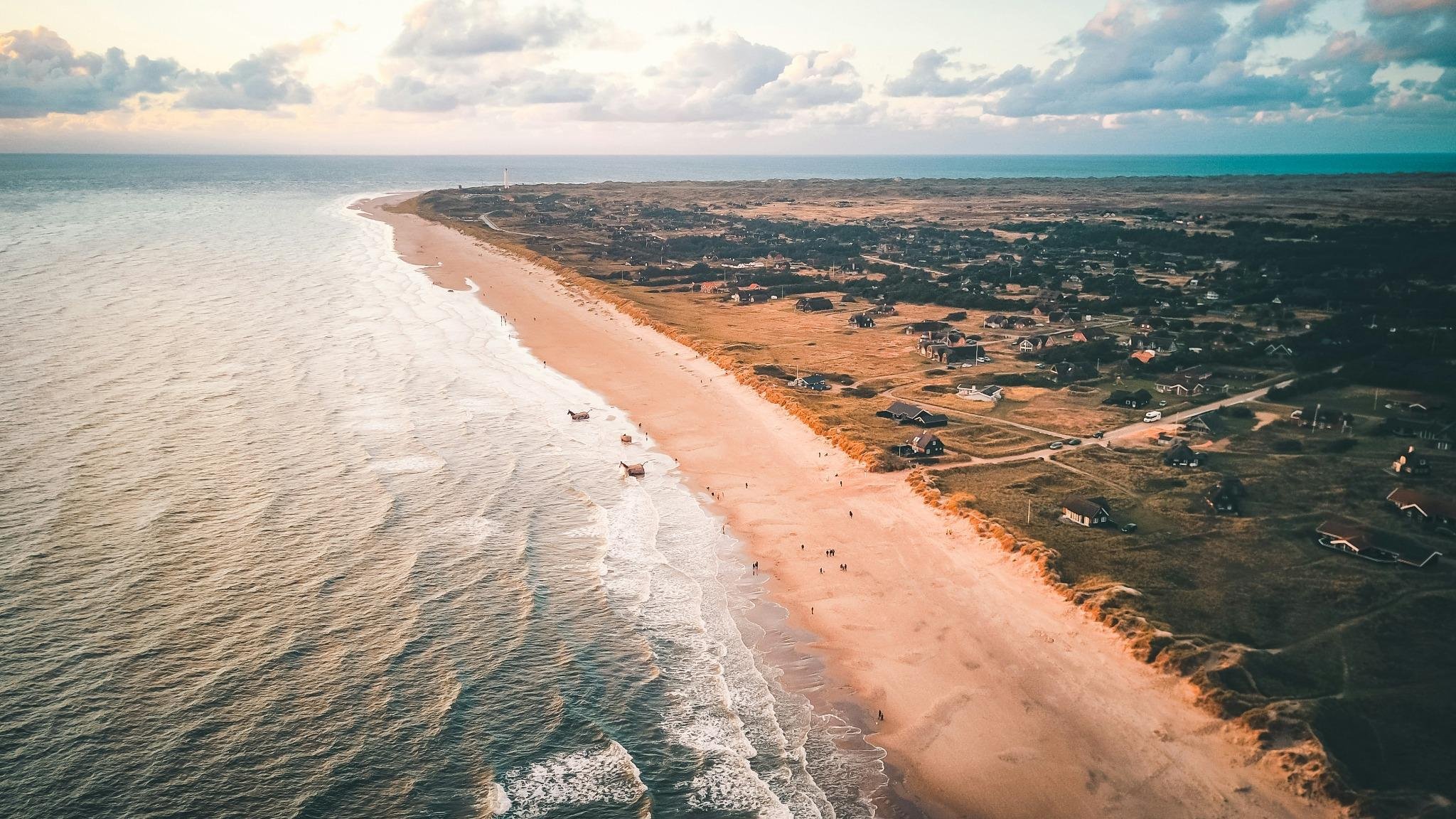
Blåvand Strand, Blåvand, Dänemark. Photo by Stefan Pasch on Unsplash.
Cost of Living: Denmark vs Germany for FIRE
To give a clear cost of living comparison between Denmark and Germany, let’s start with a city-to-city comparison—Copenhagen vs Berlin—excluding rent. According to Numbeo, the cost of living (COL) in Copenhagen is 22.5% higher than in Berlin. That gives us a clean baseline. If you include rent, the COL in Copenhagen is 24.6% higher.
While it’s hard to find exact data on the cost of living on Ærø specifically, it’s fair to assume it would be lower than Copenhagen. Still, there will be some increased transportation costs related to the ferry and the transportation premium you pay for products being brought to the island. Overall, I think it’s fair to expect the island to be about 10-15% more expensive than in the Berlin area.
In a very detailed calculation, another aspect to consider is your own means of transport. Where we live, we rely on our bikes and public transport, and only rent or use car sharing occasionally. While Ærø has free and a high-quality public transport, and we did see many residents biking between towns, it’s fair to assume a car would be at least partially needed when living in a remote location. As we covered in a previous post, the monthly cost of car ownership is unlikely to be under €500 per month when you factor in all costs.
Still, at this point, my back-of-the-envelope estimate suggests that this would still be a good move financially. Even with a 20% increase in cost of living, if you manage to lock in your housing expenses with a €300k property, a FIRE portfolio intended originally to cover our expenses (including rent) in Germany would likely do even better in Denmark.
Of course, the exact outcome depends heavily on your own spending level and portfolio size, which is why it’s worth running your personal numbers on a FI calculator before making any relocation decision.
Of course, if Danish property prices were to rise sharply or if future tax reforms increased capital-income rates further, the balance could shift. The Netherlands—just across the border from both—is a live case study of exactly this: its Box 3 reform introduces annual taxation of unrealized investment gains, a model that other European governments could eventually try to follow.
Personally, at this point I would still say yes to moving to Denmark. Honestly, the quality of life seems higher to me and Denmark gives you coastlines, cycling, safety, English, a softer pace of life, friendly folks, and a moderate island climate compared to the cold of Berlin. I’m not forgetting that it also gives you wind (which I personally prefer for sailing), dark winters, Danish admin, and reliance on ferries to cross to the mainland.
Healthcare is another key piece of the FIRE equation. Both Denmark and Germany provide universal coverage: Denmark funds it directly through general taxation, while in Germany you remain in the statutory or private health insurance system. For most retirees, the Danish model means fewer moving parts—no monthly insurance premium—but it’s worth checking how your specific pension or income source is treated.
With housing and daily costs mapped out, the next—and potentially decisive—factor is the taxation of your investment portfolio.

Copenhagen’s cost of living is 22.5% higher than in Berlin. Photo by Nick Karvounis on Unsplash.
Investment Taxes: Denmark vs Germany for FIRE Investors
Let’s start out with the good news. Unlike most countries in the EU, when you become a Danish tax resident, the market value of your securities on the day you arrive becomes your new acquisition price. In practice, this means Denmark ignores (or “forgets”) all the gains you accumulated in your portfolio before moving—those are never taxed in Denmark. However, from that day forward, all new gains are taxed under Danish rules.
For example, if you move to Denmark on a €1M portfolio from Germany, chances are roughly €700k of this will have come from your own contributions during your career and about €300k from the growth of the portfolio. Of course, the exact share will depend on an individual basis depending on multiple factors.
If you retired in Germany, each portfolio withdrawal would be taxed at Germany’s flat capital gains tax (CGT) of 26.375%—remember, only the gains part of the withdrawal is taxed, not the whole withdrawal. So, it does make a really big impact to arrive to Denmark and have the €300k gains “forgotten”. It’s as if the whole €1M had come from your contributions, which is great news.
But here’s where the good news ends. For many FIRE investors—especially those using accumulating index ETFs (the standard choice in Germany)—Denmark’s rules can be significantly more punitive: it not only has the highest headline CGT in Europe (42%), but it also applies it yearly to the entire yearly growth of your portfolio—even if you don’t sell. This is the so-called “mark-to-market” taxation (lagerbeskatning).
It has two different tax levels—up to an equivalent of about €9,000 (or €18,000 for couples), the gains are taxed at 27%; anything above is taxed at 42%. This mark-to-market approach is unusual by international standards and is one of the most important factors to model carefully before relocating.
Let’s see what that looks like in practice with an accumulating ETF example (later we’ll show how switching to a distributing ETF avoids this). If your €1M stock portfolio had a 10% nominal return in year 1, then your portfolio would be taxed on €100,000 of gains. If you are a couple, €18,000 would be taxed at 27% (€4,860), and the remaining €82,000 at 42% (€34,400). The total tax bill would be about €39,300.
For the sake of simplicity, if you follow the 4% rule, you would also withdraw €40,000 to cover your living expenses. So, from the €100,000 gain, only about €20,000 would stay in your portfolio: €40,000 would be used for living expenses and €39,300 for taxes.
In practice, this isn’t the 4% rule though, because you’d be withdrawing closer to 7% of your portfolio (€79,300/€1,100,000). If you’re familiar with sequence of return risk, you know this withdrawal is a very risky proposition on this portfolio, especially for early retirees. In practice, to make it work in Denmark, you’d need to save a much larger portfolio to account for these high taxes.
How does it compare to Germany? Like most other countries, Germany largely taxes investment gains upon withdrawal rather than fully taxing annual portfolio growth. So, for a €40,000 withdrawal and assuming roughly 30% of it was gains and 70% came from our after-tax contributions, the annual tax on €40,000 would be—roughly—€3,165 (€40,000 × 30% × 26.375%). In this particular example, assuming a fairly typical 10% nominal return, you’d pay about 12 times more taxes in Denmark than in Germany.
This example is a bit of a worst-case scenario, because it assumes you simply carry over a typical accumulating ETF portfolio from Germany. In Denmark, that’s one of the least tax-efficient ways to invest. The good news is there is an optimisation strategy. By restructuring your accumulating ETF into distributing ETFs instead (or individual stocks), you can avoid most of this mark-to-market nightmare. Let’s run the numbers again under this tax-efficient setup.
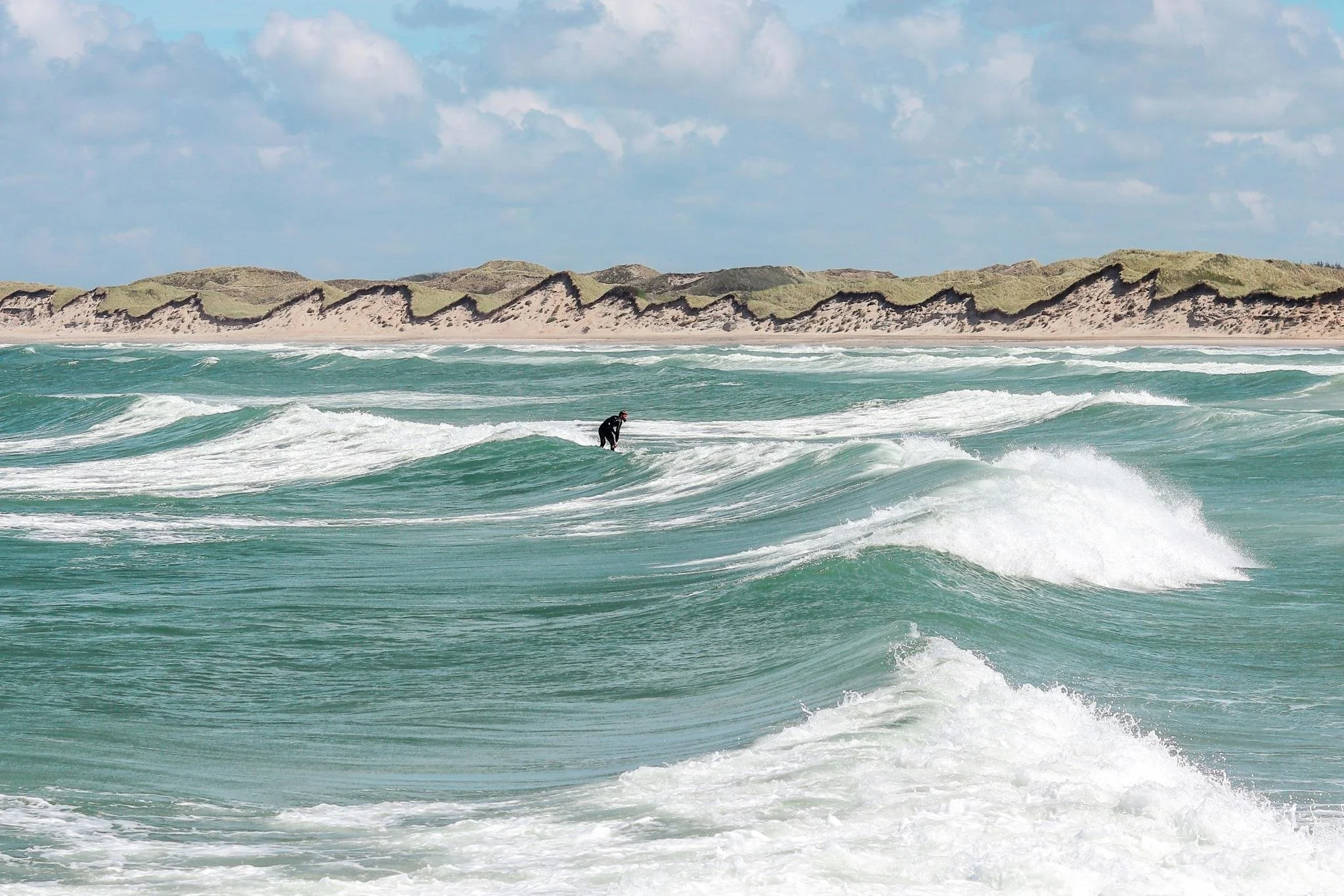
Nørre Vorupør, Thisted, Denmark. Photo by Jan Ferchof on Unsplash.
How Distributing ETFs Avoid Denmark’s Mark-to-Market Tax
In contrast to an accumulating ETF, which reinvests automatically the dividends, a comparable distributing ETF regularly pays out dividends to the investor. Otherwise, there is no other difference in these investment vehicles—you can own the exact same underlying stocks. Let’s run again the same example as above, but assume this time we switched on arrival to a far more efficient distributing ETF.
Assuming again a 10% annual growth (2% from dividends, 8% from appreciation) on a €1M portfolio, the taxes would be as follows: 2% dividends would provide €20k, which would be taxed approximately €6k (27% x €18k + 42% x €2k). To cover your €40k annual expenses you’d still need to sell about €26–27k and pay another ~€600 in taxes (assuming 8% growth, only €2.2k is taxed at 27%)
So, the grand total tax would be about €6,600—double the tax bill of Germany. This is the key tax difference between Denmark and Germany for retirees living off their portfolios, and it’s immensely better than the previous scenario.
So far, I’m aware that this article has been a bit of a roller coaster, especially after the huge tax bill shown in the previous example. But overall, it turns out that taxes, while substantially larger than in Germany, shouldn’t necessarily constitute a make-or-break decision. On the one hand, you may have to aim for a slightly larger portfolio to cover the increase in costs related to taxes. But on the other hand, if you manage to lock in a very low property price, your housing costs dramatically reduce and so does your retirement portfolio target.
So, in this example retiring to Denmark cost roughly €3,000 more tax per €40,000 of net spending, and also 10-20% more in terms of cost of living (€4,000–€8,000 more on an annual €40,000 spend). This is still a small amount compared to the savings of buying a dream property for €300,000 instead of €1M. Considering the 4% rule, the €700k saved and invested alone generates 28,000 per year.
All things, considered, I think the Denmark dream is still alive. It’s probably a good idea to plan for approximately a x2 higher tax drag on your FIRE cost estimates. It’s also really important to always consult with a especialized tax advisor before making any cross-country move like this.
Today’s post has served as an initial, high-level thought experiment for someone who came back very excited—and still is—about the prospect of FIRE-ing to a Scandinavian country, especially given how consistently the Nordics score on safety, healthcare, and overall quality of life.
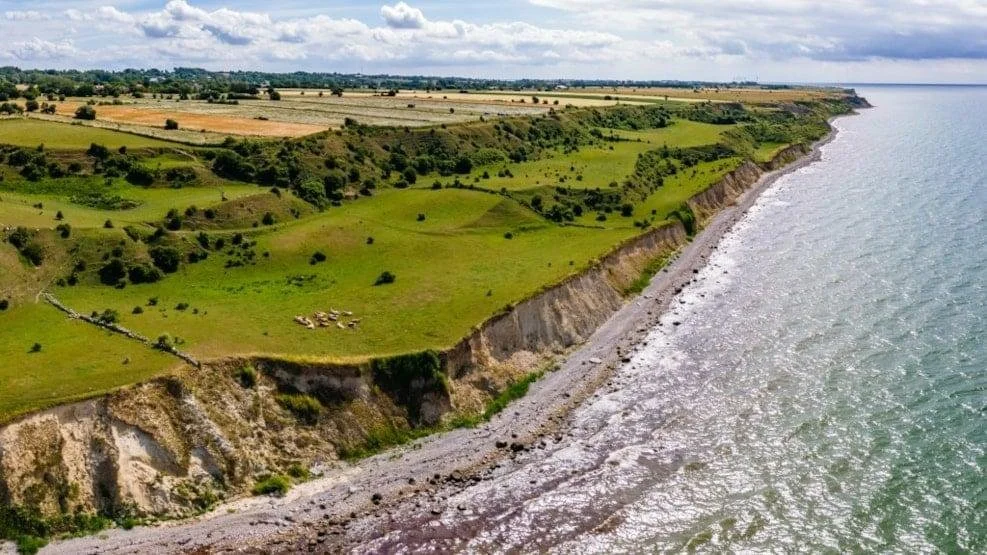
Moraine cliffs at Voderup, Ærø. Source: https://www.visitaeroe.com/
Conclusion: Is Early Retirement in Denmark Worth It?
Ærø and other Danish islands can feel like a real-life postcard—sea views for a fraction of German prices and a culture that seems built for slow, happy living. Surprisingly, when you put the numbers side-by-side the picture still holds up:
Housing savings dwarf the 10–20 % bump in day-to-day costs and the roughly double tax drag (≈14% vs ≈7% effective tax rates on retirement withdrawals).
Even after adding—for an annual €40,000 spend—€3,000 a year in extra taxes and €4,000–8,000 for higher living costs, the €700k you avoid tying up in a German property can generate roughly €28,000 a year in portfolio income on its own. This amount more than offsets the increase in cost of living and taxes.
To make it work though you need to plan your investments in alignment with Denmark’s rules—switching to distributing ETFs or other tax-efficient vehicles seems almost mandatory.
Of course, if you plan to move somewhere rural or even to an island make sure you’re comfortable with dark winters, a higher degree of isolation, and a slower resale of your property if you ever want to move on.
The bottom line is thatthe Danish dream house isn’t just romantic—but financially defensible, even after accounting for higher COL and taxes. Before making any move, though, sit down with a cross-border tax professional and a financial advisor. But from a purely Financial Independence perspective, the math doesn’t seem to break the dream.
Hopefully, this article gives you a hint of the complexities involved in assessing the move—and you can make a comparable, high-level analysis of whether a given move makes sense to you financially.
If you want to run your own numbers:
👉 Estimate your FIRE timeline with our free FI Calculator (email unlock)
👉 Compare retirement destinations with our Retirement Relocation Tool
👉 Focused on the German side? See our full guide on achieving FIRE in Germany
👉 New to FIRE? Start here with our archive, including our beginner’s guide
And if, after running the numbers, property ownership still feels too rigid or high-maintenance, there are ways to gain real-estate exposure without buying a home at all. REITs (Real Estate Investment Trusts) allow investors to participate in global property income streams—without the upkeep or illiquidity of direct ownership.
💬 Are you looking to relocate in Europe upon reaching Financial Independence? Please let us know in the comments below where you are considering and how it affects your planning.
🌿 Thanks for reading The Good Life Journey. I share weekly insights on personal finance, financial independence (FIRE), and long-term investing—with work, health, and philosophy explored through the FI lens.
Disclaimer: I’m not a financial adviser, and this is not financial advice. The posts on this website are for informational purposes only; please consult a qualified adviser for personalized advice.
Check out other recent articles






















About the author:
Written by David, a former academic scientist with a PhD and over a decade of experience in data analysis, modeling, and market-based financial systems, including work related to carbon markets. I apply a research-driven, evidence-based approach to personal finance and FIRE, focusing on long-term investing, retirement planning, and financial decision-making under uncertainty.
This site documents my own journey toward financial independence, with related topics like work, health, and philosophy explored through a financial independence lens, as they influence saving, investing, and retirement planning decisions.
Frequently Asked Questions (Denmark vs Germany FIRE)
-
EU/EEA citizens can buy property in Denmark if it’s their primary residence. Holiday-home restrictions still apply and many “summer houses” cannot be occupied year-round. Non-EU buyers usually need a permit.
-
Even with a 10–20% higher cost of living and roughly double the effective tax on portfolio withdrawals, buying a €300k seaside property in rural Denmark can still be far cheaper than renting for €2k/month or buying a comparable €600 - €800k property in Germany. The housing capital you free up outweighs the extra tax and expenses.
-
Germany taxes only realised gains and dividends at a flat 26.375 %.
Denmark takes a very different approach:Distributing equity funds are still taxed on realised gains and dividends, but at 27 % on the first bracket and 42 % above it—roughly about twice the overall tax bill you’d face in Germany, yet still manageable.
Accumulating ETFs, by contrast, fall under Denmark’s “mark-to-market” (lagerbeskatning) regime, where unrealised gains are taxed every year at the same 27% / 42% rates.
That annual tax on paper gains can push your effective withdrawal rate far above what is conceived by the classic 4% rule and is the main reason most residents and expats switch to distributing funds.
-
Danish law taxes annual economic return to prevent indefinite deferral. Funds that reinvest everything are taxed each year on paper gains (“lagerbeskatning”), unlike distributing funds which are taxed only when dividends are paid or shares sold.
-
The Danish krone is tightly pegged to the euro and most global ETFs hold many currencies. The additional exchange-rate risk of spending in DKK instead of EUR is negligible compared with the built-in currency exposure of a global portfolio.
-
Denmark provides universal healthcare funded through taxes, so there are no monthly insurance premiums. In Germany you remain in the statutory or private system, where premiums depend on income and age.
-
Yes. EU/EEA citizens can buy only if the property is their primary residence. Non-EU citizens usually need a special permit to buy or settle permanently.
-
If you restructure into distributing ETFs, the classic 4 % rule remains broadly workable. Without restructuring, mark-to-market taxation can push effective withdrawals toward 7%, making a much larger portfolio necessary.
-
Public transport on Ærø is free and reliable, and short trips between towns are bike-friendly. That said, most retirees will still want a car for off-island errands and winter convenience. Budget roughly €500/month for full car ownership costs.
Join readers from more than 100 countries, subscribe below!
Didn't Find What You Were After? Try Searching Here For Other Topics Or Articles: